Absolute Precision for Every Photon.
The right light fuels optimal yield, but guessing your intensity costs money. The AROYA DLI sensor provides research-grade, full-spectrum PAR data to perfectly balance plant productivity with energy efficiency, ensuring every watt drives your bottom line.
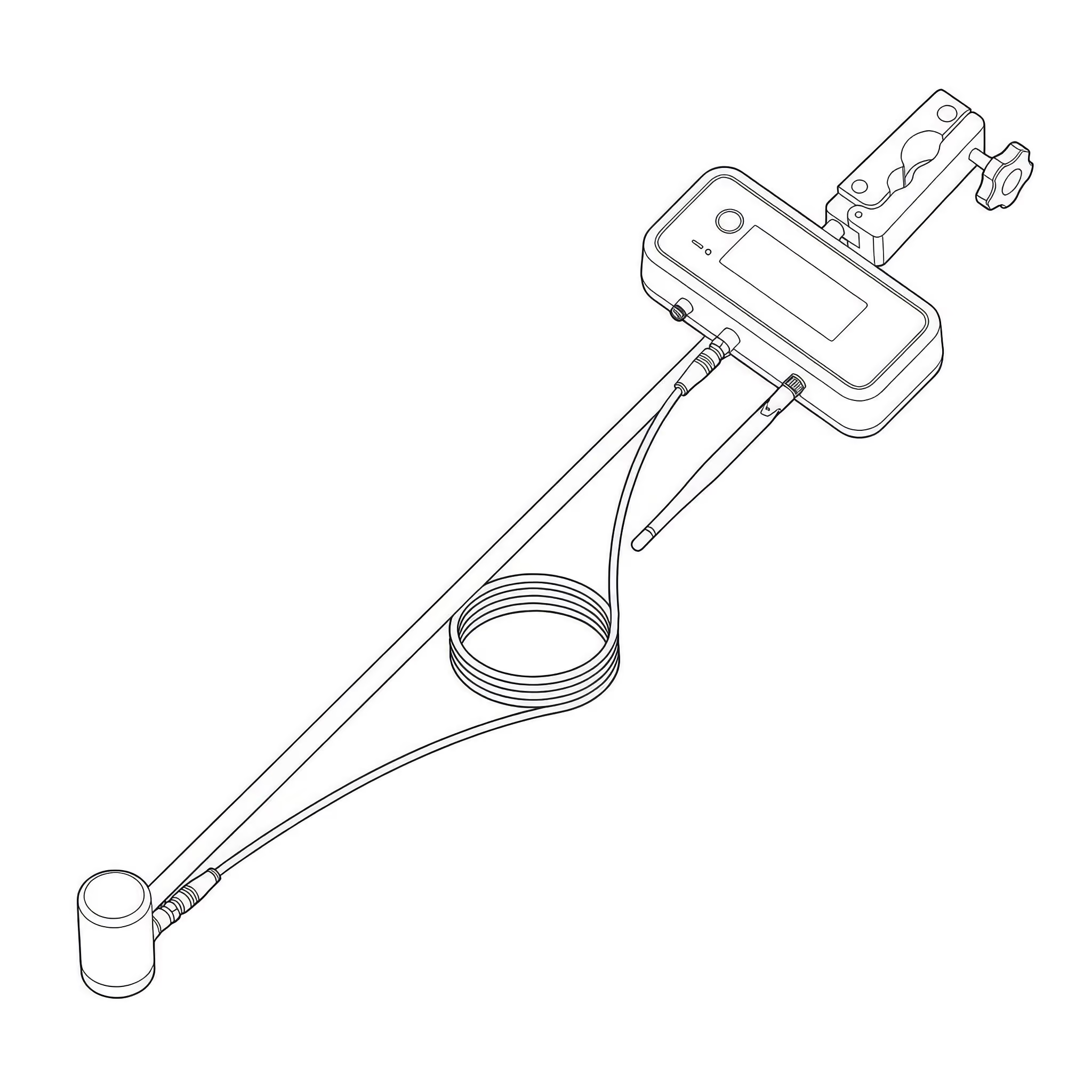



PPFD
850 µmol/m²/s
DLI
mol/m²/day
Light Efficiency
2.8 µmol/J
WHAT IT CONTROLS
Stop guessing at your light footprint.
Light is the engine of photosynthesis, but it’s also your heaviest overhead cost. The AROYA DLI sensor gives you the definitive numbers required to fine-tune fixture layouts, hit target intensities, and eliminate energy waste across every phase of growth.
Light is the engine of photosynthesis, but it’s also your heaviest overhead cost. The AROYA DLI sensor gives you the definitive numbers required to fine-tune fixture layouts, hit target intensities, and eliminate energy waste across every phase of growth.
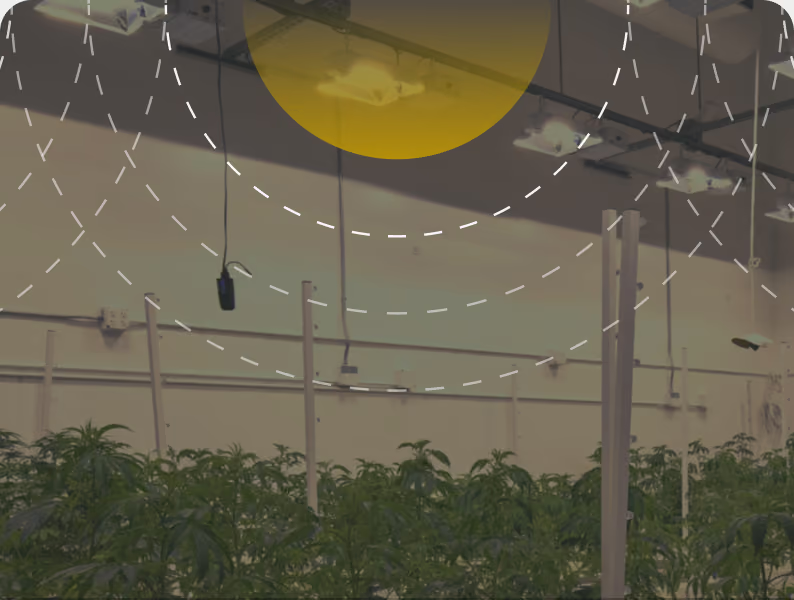
Photosynthetic Photon Flux Density (PPFD)
Measure the exact intensity of light hitting the canopy at any given second, ensuring your plants are never starved in the corners or stressed directly under the fixtures.
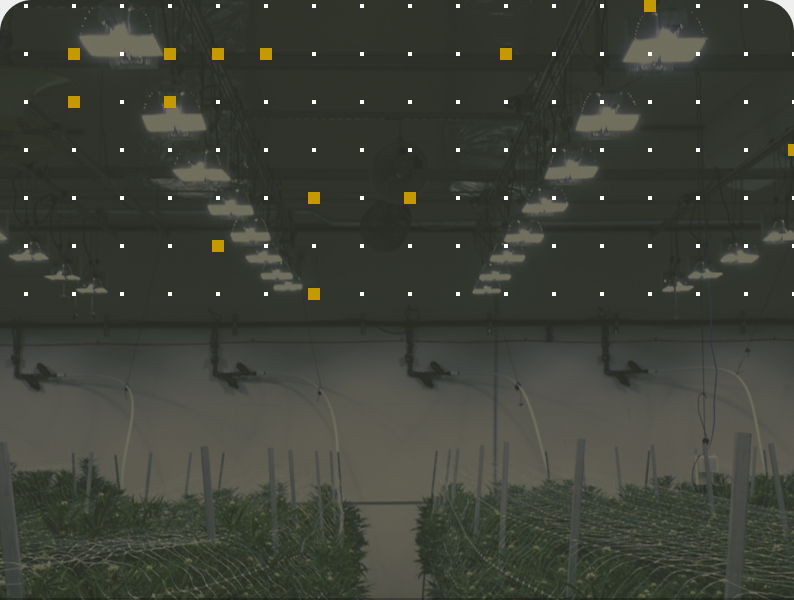
Daily Light Integral (DLI)
Track the cumulative light delivered over a 24-hour period. Hit your precise metabolic targets for veg and flower without overspending on electricity.
Full-Spectrum Accuracy
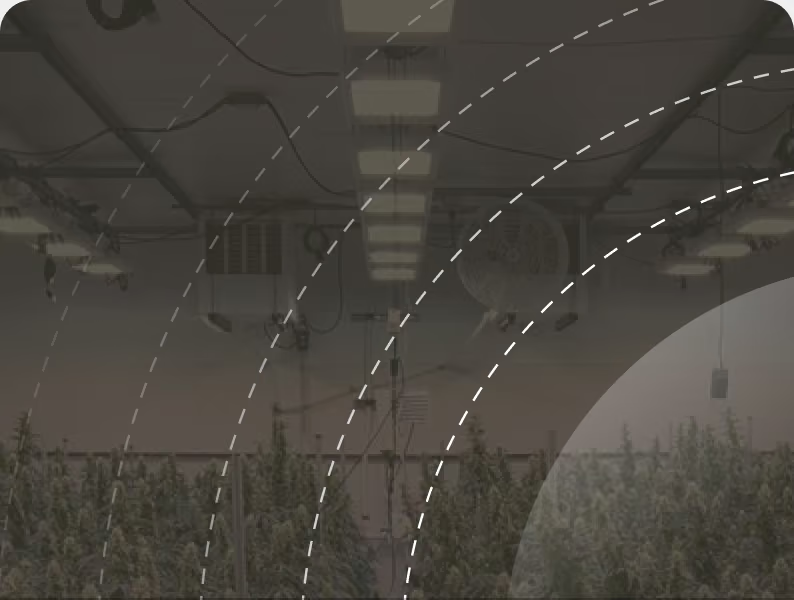
Whether you run LEDs, HPS, metal halide, or a hybrid layout, the quantum PAR sensor captures the entire 400–700 nm range to deliver the whole truth about your spectrum.
THE HARDWARE
Built for intense heat and unrelenting humidity.
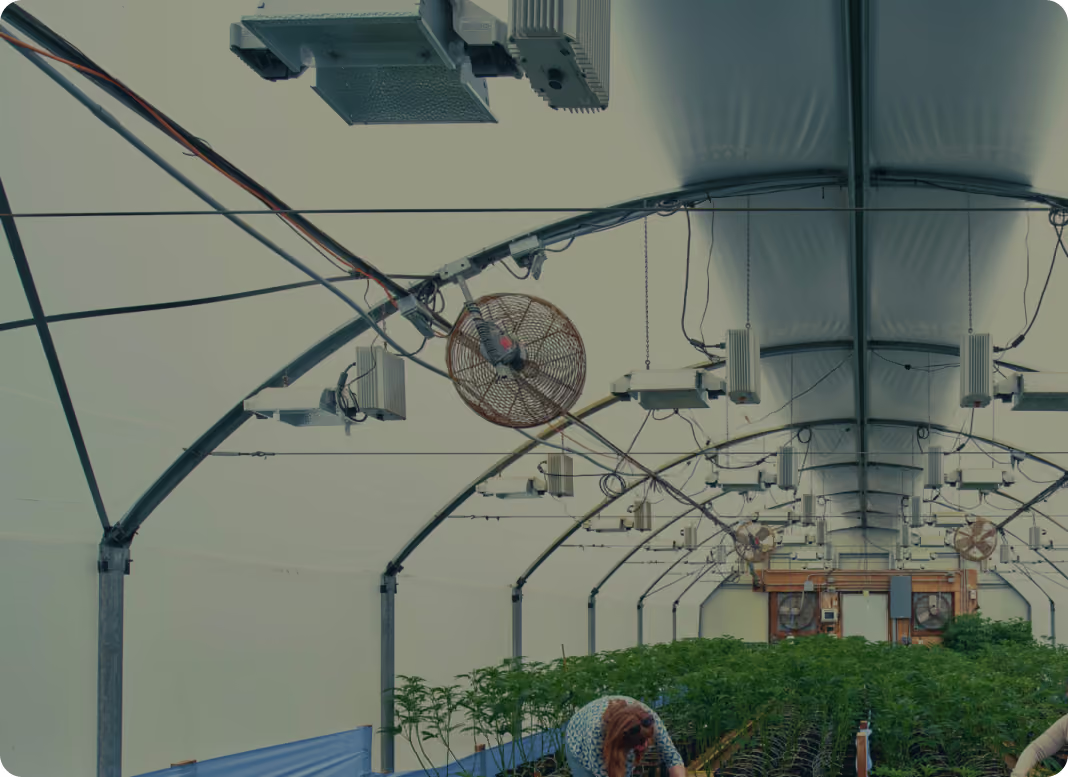
Commercial grow lights create brutal localized microclimates. Your sensors have to survive intense radiant heat and heavy moisture without their accuracy drifting over time.
Commercial grow lights create brutal localized microclimates. Your sensors have to survive intense radiant heat and heavy moisture without their accuracy drifting over time.
The Build
Engineered to operate flawlessly in environments ranging from -40 to 70 °C, the DLI sensor is completely impervious to humidity, it can even be submerged in up to 30 meters of water.
Boasting a long-term measurement drift of less than 2% per year and a full 180° field of view, it delivers unrelenting accuracy cycle after cycle, ensuring your lighting data remains pure.
impervious to humidity
full 180° field of view
unrelenting accuracy
AROYA SOftware
Correlate lights with crop performance.
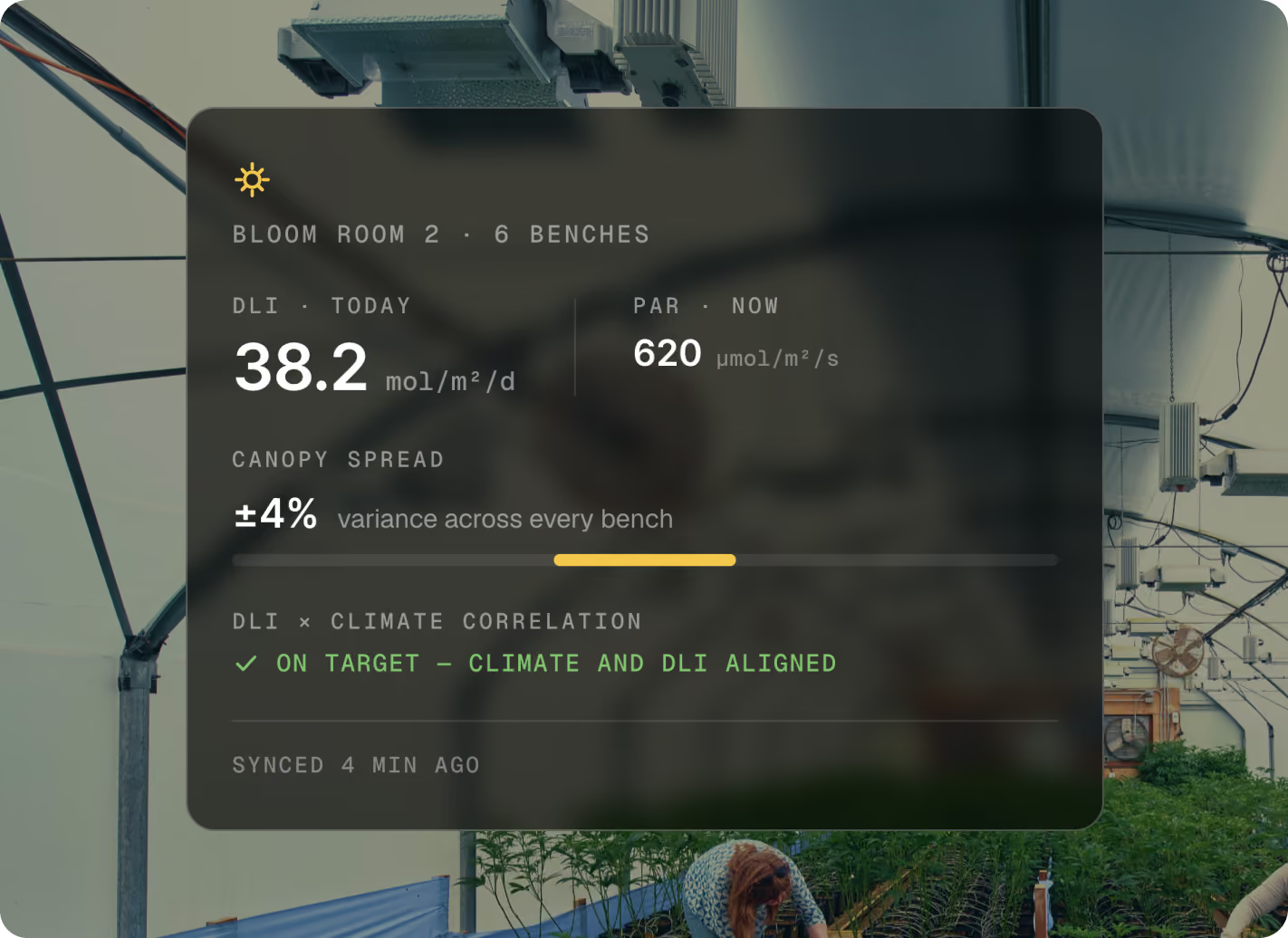
A handheld light meter only tells you what’s happening in a single moment, in a single, specific area of your cultivation. By streaming your continuous PAR and DLI data directly into AROYA Software, we transform isolated readings into a historical record of your canopy's energy intake.
A handheld light meter only tells you what’s happening in a single moment, in a single, specific area of your cultivation. By streaming your continuous PAR and DLI data directly into AROYA Software, we transform isolated readings into a historical record of your canopy's energy intake.
Data-Driven Alignment: Instead of guessing if your lighting schedule is effective, your team can precisely track the light your canopy is actually receiving. The software correlates your DLI targets with your substrate and climate data, allowing your head grower to understand exactly how light intensity impacts your drybacks and crop steering strategy.
Recipe Standardization: Build precise lighting recipes based on what actually works. By documenting the exact Daily Light Integral that produced your best harvests, you can standardize the lighting inputs required to repeat your top-tier runs, room after room, time after time.
AROYA SOftware
Eliminate waste. Optimize your energy.
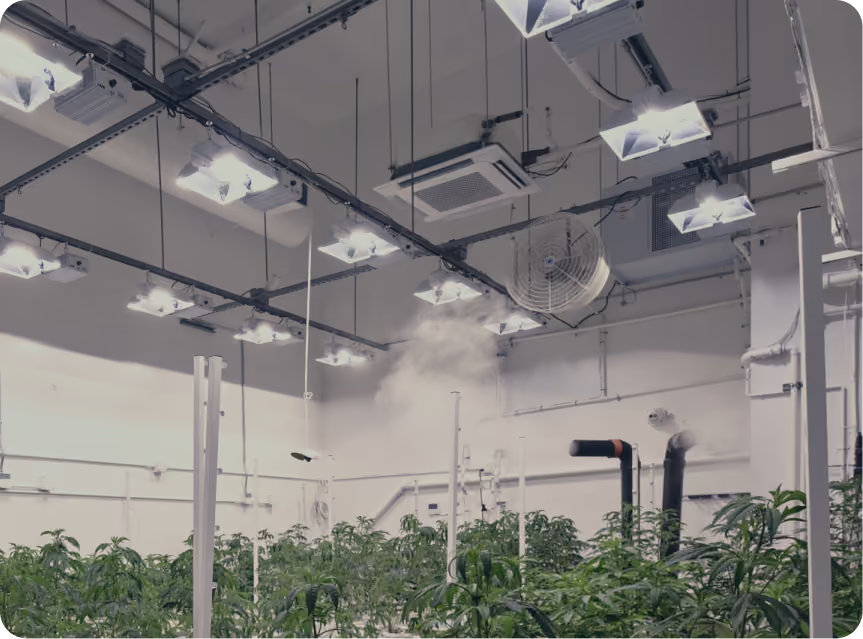
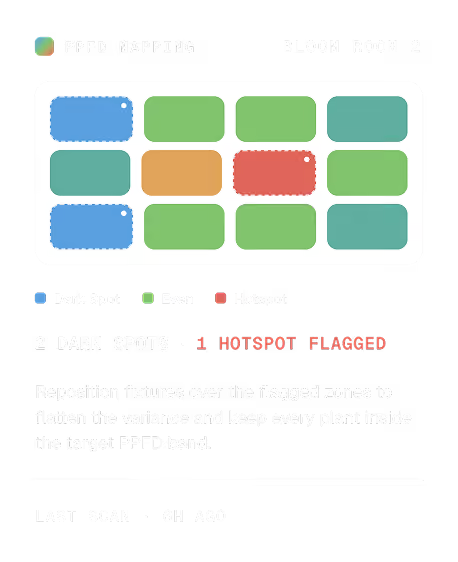
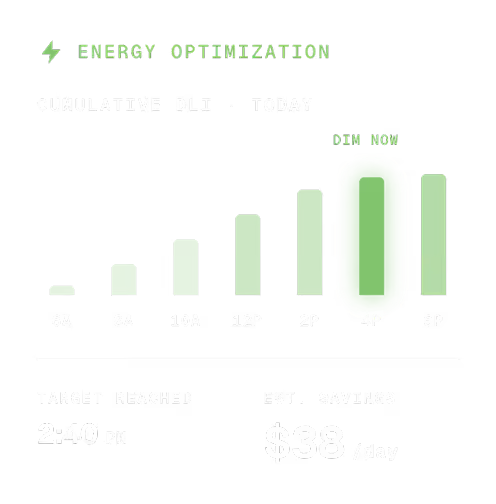
Pushing lights to 100% all the time isn’t a strategy; it’s a massive expense. The DLI sensor gives you the continuous data required to turn passive light monitoring into an active cost-saving mechanism.
Pushing lights to 100% all the time isn’t a strategy; it’s a massive expense. The DLI sensor gives you the continuous data required to turn passive light monitoring into an active cost-saving mechanism.
AROYA customer success
Aligning your lizght with your facility's engine.
Buying the best lights doesn't guarantee the best harvest. When you deploy our DLI sensors, you unlock AROYA Ignite. AROYA Ignite is our dedicated roster of the industry's most experienced cultivation professionals, focused entirely on delivering your success. We pair you with veteran operators who help translate your lighting data into optimized crop steering.
Buying the best lights doesn't guarantee the best harvest. When you deploy our DLI sensors, you unlock AROYA Ignite. AROYA Ignite is our dedicated roster of the industry's most experienced cultivation professionals, focused entirely on delivering your success. We pair you with veteran operators who help translate your lighting data into optimized crop steering.
Metabolic Alignment
High PPFD is useless if your substrate can't support it. Our master growers help you correlate your lighting data with your TEROS ONE metrics, ensuring your drybacks and irrigation events perfectly match the plant's increased energetic demand.
Fixture Strategy
From managing LED transitions to optimizing legacy HPS layouts, the Ignite team provides actionable guidance on fixture height, spacing, and dimming schedules to maximize the footprint of every light.
Troubleshooting Canopy Stress
If your plants are exhibiting signs of light burn or underperformance, our seasoned operators are on call to help you decode your DLI data and adjust your intensity before it permanently damages the crop.
The engine of crop steering.
The exact financial cost of your light.
Electricity is one of your largest operational line items. By integrating flawless DLI data into the AROYA ecosystem, you transform your lighting strategy from a fixed, unmanaged expense into a highly optimized financial asset.
Electricity is one of your largest operational line items. By integrating flawless DLI data into the AROYA ecosystem, you transform your lighting strategy from a fixed, unmanaged expense into a highly optimized financial asset.
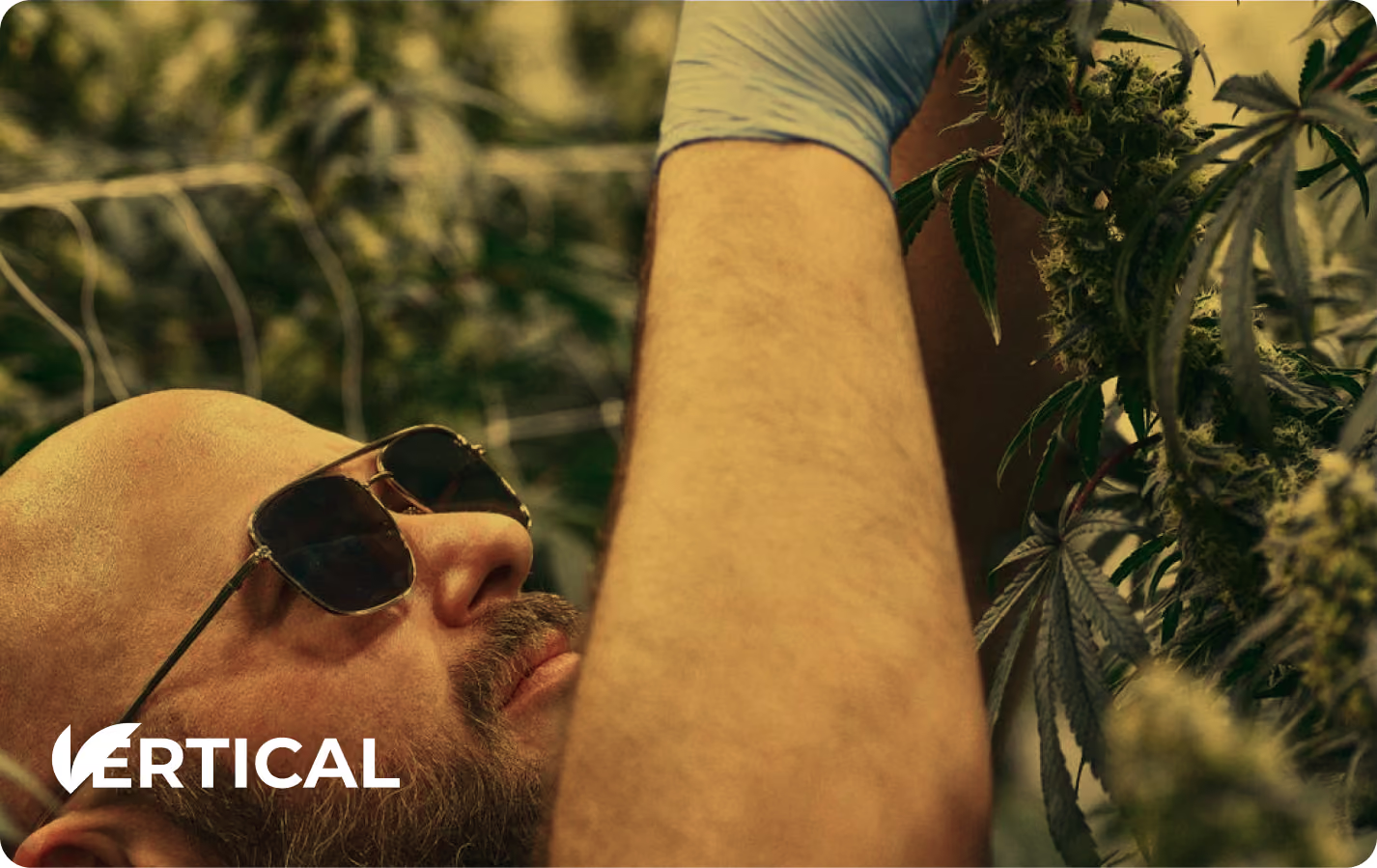
“Dialing it in and just being able to see every aspect of the rooms and the plants at the same time, it’s helped immensely.”

Utility Cost Reduction
Stop over-illuminating. By hitting exact Daily Light Integral targets rather than relying on standard timers, you can strategically dim fixtures, immediately stripping thousands of dollars from your monthly energy overhead.

Premium Canopy Consistency
Eliminate B-grade buds caused by uneven light distribution. Perfecting your PPFD map guarantees uniform development across the entire room, protecting your top-tier wholesale valuation.

Infrastructure Validation
You invested millions in your lighting grid. Continuous PAR tracking serves as an ongoing audit, instantly identifying degrading bulbs or failing LED drivers so you get the exact performance you paid for.
FAQ
Frequently Asked Questions
The sensor measures the entire range of light plants use for photosynthesis (400–700 nm), specifically calculating Photosynthetic photon flux density (PPFD) and the Daily light integral (DLI).
Photosynthetic photon flux density (PPFD) measures the immediate intensity of the light hitting the canopy at a specific second. Daily light integral (DLI) measures the total accumulated amount of light delivered to the canopy over a full 24-hour period.
Yes. Because different lights emphasize different parts of the spectrum, our full-spectrum quantum PAR sensor is engineered to respond correctly across all wavelengths. It provides flawless data whether you are running LEDs, HPS, metal halide, or a mixed-fixture room.
Absolutely. The hardware is designed for extreme commercial environments. It operates flawlessly in 100% relative humidity and is rugged enough to be completely submerged in up to 30 meters of water.
The sensor is built for long-term reliability with a documented measurement drift of less than 2% per year, ensuring you don't have to constantly replace or recalibrate your hardware to get the truth.
THE DETAILS
Technical Specifications
Measurement Range
0 to 4000 μmol m⁻² s⁻¹
Long-Term Drift
Less than 2% per year
Spectral Sensitivity
Less than 10% from 412 to 682 ± 5 nm
Field of View
180°
Measurement Repeatability
Less than 1% (Up to 5000 μmol m⁻² s⁻¹)
Operating Environment
-40 to 70 °C; 0 to 100% relative humidity
Water Activity Repeatability
0.002 $a_w$ (dew point), 0.010 $a_w$ (capacitance)
Submersibility
Can be submerged in water up to depths of 30 m