Data-Driven Irrigation vs Manual Irrigation
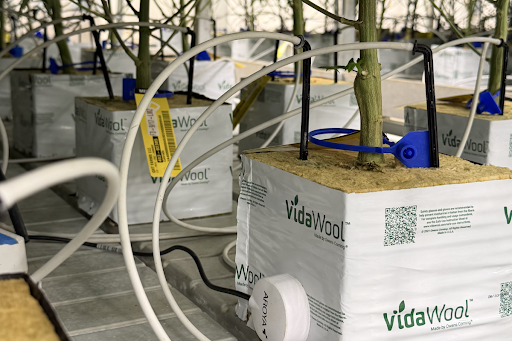
The difference between data-driven irrigation and manual irrigation comes down to what triggers each shot. Manual irrigation runs on a grower's judgment, a timer or a quick check of the pots.
Data-driven irrigation runs on live readings from a cannabis moisture sensor in the substrate, so each decision reflects what the root zone is doing right now.
Both approaches can grow high-quality cannabis. The question for a commercial operation is which one holds up as rooms, cultivars and staff multiply. This guide compares the two side by side and explains how to decide which fits your facility.
What Is the Difference Between Data-Driven and Manual Irrigation?
Manual irrigation covers hand watering and fixed timer schedules set by the grower. Checks are done by feel and sight, such as lifting pots to judge weight, watching the canopy and catching runoff in a bucket to see how much came through. The decisions can be very good, but they depend on the person making them and how often they check.
Data-driven irrigation bases decisions on live root-zone readings. Sensors in the substrate track water content, EC (electrical conductivity, a measure of nutrient concentration) and temperature, and runoff is measured as it happens.
Irrigation timing and shot size follow targets set from that data, such as field capacity (how much water the substrate holds once it has been saturated and drained) and dryback (how far water content falls between irrigations).
Automated and data-driven don't mean the same thing.
A timer is automated, but it's blind to what the plants need on a given day. It helps to separate three ideas. Monitoring means seeing the data, automation means a machine carries out a task, and control means the system decides when and how much based on conditions.
A data-driven setup can sit at any of those levels, as long as the decision traces back to real readings.
How Does Manual Irrigation Work in a Commercial Grow?
Most commercial grows that irrigate manually use some mix of three methods. Hand watering still shows up in smaller rooms. Static timer schedules handle larger rooms, often through drip lines. Pot-weight checks and runoff tests are used to see whether the schedule is roughly right.
The decisions come from experience. A skilled grower reads the canopy, remembers how a cultivar behaved last run and adjusts based on readings taken the day before. That knowledge is real and hard won, and it's the foundation any better system should build on rather than replace.
Manual irrigation also has genuine strengths. Upfront cost is low, the grower has direct control over every change, and it fits small rooms or trial setups well. For a single room with an experienced grower on site every day, it can work.
Where Does Manual Irrigation Fall Short at Scale?
A static schedule can't respond to change. A hotter day or a thirstier cultivar changes how much water the plants use, and so does every move into a new growth phase. The timer keeps doing what it was told until someone notices and rewrites it.
That notice usually happens late. Over- or under-watering tends to show in the canopy only after the root zone has been off target for hours. By then, the plant has already spent time stressed, and that time doesn't come back.
Variation is the other problem. Two rooms run by two people rarely get irrigated the same way, even with the same instructions.
Results become hard to repeat, and it's difficult to tell whether a great run came from the method or the person. On top of that, manual checks and schedule updates take real staff time, and that time grows with every zone you add.
How Does Data-Driven Irrigation Work?
Data-driven irrigation starts with sensors. A cannabis moisture sensor placed in the substrate reads water content, EC and temperature continuously. Runoff data shows how much solution is leaving the container and how concentrated it is.
Growers then use field capacity and dryback targets to make decisions. Together, they answer the two big questions: when should the next shot happen, and how large should it be?
There are two levels of data-driven irrigation. At the first, sensor data guides the grower's own decisions, and staff still adjust schedules or trigger irrigation themselves. At the second, the system triggers irrigation automatically from the data through a cannabis fertigation system or controller.
Climate data rounds out the picture. Temperature, humidity and VPD (vapor pressure deficit, which combines temperature and humidity into a measure of how hard the air pulls water from the plant) affect how fast plants transpire, which changes how quickly the substrate dries.
When irrigation decisions take the climate into account, a shift in room conditions shows up in the irrigation plan the same day. Without that link, the grower often finds out a day later.
The records matter as well. Every irrigation event, dryback and runoff reading becomes part of the run's history. That history is what lets you repeat a strong run in another room, and it gives new staff and leadership the reasoning behind each decision.
Good data-driven irrigation aims beyond keeping the substrate hydrated. The goal is shots that move the crop toward the result the grower is steering for.
How Do Manual and Data-Driven Irrigation Compare?
The table below compares the two approaches as methods, not as products. Your results will depend on your facility, your staff and how well each approach is run.
Factor
Manual irrigation
Data-driven irrigation
Decision basis
Grower judgment, timers, pot weight and visual cues
Live substrate water content, EC, temperature and runoff
Response time
Hours to days, depending on how often someone checks
Minutes, based on continuous readings
Consistency across rooms
Varies with staff and schedules
Same targets and logic applied in every room
Labor
Ongoing checks, schedule updates and manual logs
Fewer routine checks, with staff focused on strategy
Water and nutrient use
Fixed volumes can lead to excess runoff
Shots sized to field capacity and runoff targets
Record-keeping
Handwritten or spreadsheet, often incomplete
Logged automatically for every irrigation event
Upfront cost
Low
Higher, for sensors, software and controllers
The trade-off is fairly clear. Manual irrigation costs less to start but more to run as you scale. Data-driven irrigation costs more upfront and earns it back through steadier results and lower labor and input costs. How fast that happens varies by facility.
How Does AROYA Handle Data-Driven Irrigation?
AROYA's sensors capture substrate moisture, EC and runoff every three minutes. Its Intelligent Irrigation, powered by AUTOMAIT™, uses that data to trigger irrigation based on actual field capacity rather than fixed setpoints or the clock.
The system interprets readings against the plant's demand and the grower's steering strategy, then refines its response every cycle.
The grower stays in charge of the strategy. You set the custom guardrails, such as capping EC levels or irrigating at specific intervals, and the system works inside them. AROYA also describes a failback system that keeps irrigation running based on prior learnings if a controller drops communication.
AROYA publishes two figures for this approach, both framed as upper limits. Cultivators have reported saving up to 60 hours a month on irrigation decisions and manual execution.
AROYA also states that dialing in field capacity can deliver up to a 20% reduction in water and nutrient use. Neither should be read as a typical result for every facility.
Wood Wide offers a practical example. The team tracked water content and used historical data in AROYA to find efficiency in their irrigation. That data helped them move from lifting pots and hand-watering toward automated watering, with repeatable recipes replacing handwritten notes.
Which Irrigation Approach Fits Your Operation?
A few factors usually decide it. Canopy size and the number of rooms matter most, because manual work scales with every zone.
A wide cultivar mix makes static schedules harder to keep accurate. Staffing levels and how consistent your results need to be, whether for buyers, brand standards or investors, also push the decision one way or the other.
Test before you commit. Put sensors in one room first and compare the data against your current manual practice. You'll see how close your schedules were to what the plants actually needed, and you'll have your own numbers to judge whether going further makes sense.
You don't have to jump straight to full automation either. Plenty of growers spend a run or two using sensor data to guide their own decisions before letting the system trigger irrigation.
That middle step builds the team's trust in the numbers and shows them where their instincts were right and where they weren't. When automated control comes next, it feels like a natural step.
If you're working out shot size and volume in the meantime, AROYA's free irrigation calculator is a useful starting point. Once you have a room's worth of data, cannabis grow software can turn it into an irrigation plan that responds to what the crop is actually doing.
Data-Driven Irrigation vs Manual Irrigation FAQs
What is the difference between manual and automated irrigation for cannabis?
Manual irrigation relies on hand watering or schedules set and adjusted by staff. Automated irrigation uses equipment to run irrigation without someone opening valves. Automation can still be blind if it runs on a timer and ignores root-zone data.
Is timer-based irrigation the same as data-driven irrigation?
No. A timer runs the same program regardless of conditions. Data-driven irrigation changes timing and shot size based on substrate water content, EC and runoff.
Is hand watering still practical for a commercial cannabis grow?
It can work in small rooms or trials with experienced staff on site. As canopy and room count grow, the labor and inconsistency usually become hard to manage. That's typically the point where growers start looking at schedules driven by data.
What data do you need for data-driven irrigation?
You need substrate water content, substrate EC and substrate temperature, plus runoff volume and EC. Field capacity and dryback targets turn those readings into decisions. Climate data such as VPD adds useful context.
How often should substrate data be measured to guide irrigation?
Often enough to see changes between irrigation events. Conditions can shift quickly, so continuous readings are far more useful than a daily spot check. AROYA's TEROS® ONE sensor, for example, takes a reading every three minutes.
How does data-driven irrigation help prevent overwatering?
It shows when the substrate hasn't dried back to target, so the next shot can wait. Shots are sized to field capacity, which limits excess runoff. Alerts can also flag a room that stays too wet.
Does automated irrigation take control away from the head grower?
It shouldn't. In a well-designed system, the grower sets the strategy and guardrails and the system carries them out. With AROYA, growers define limits such as EC caps and irrigation intervals.
Can you still water manually with an automated irrigation system?
Most growers want that option, especially for flushes or unusual situations. How manual overrides work depends on the system and controller you use. In AROYA, growers can trigger an on-demand manual irrigation event from the interface, with custom zones and durations, without reworking the wider schedule.
How much labor can data-driven irrigation save?
It depends on how many zones you run and how much manual work you do now. AROYA reports cultivators saving up to 60 hours a month on irrigation decisions and manual execution. Track your own hours before and after to know your figure.
Is data-driven irrigation worth it for a small grow?
It can be, particularly if consistency or limited staff time is a concern. Smaller grows have fewer zones, so the labor saving may be smaller. A one-room sensor trial is a low-risk way to find out.
Conclusion
Manual irrigation leans on experience and costs little to start, but it struggles to keep pace as a facility grows.
Data-driven irrigation uses live root-zone readings to time and size every shot, which makes results easier to repeat across rooms and staff. For most commercial grows, the sensible path is gradual: measure first, compare with what you do now, then decide how far to automate.
If you'd like to see how data-driven irrigation would work in your rooms, schedule a demo with AROYA. The team can walk through your current setup and show how substrate data and Intelligent Irrigation could work alongside your growers' judgment.